Etruscan Culture and its influences.
Understanding the burial practices of an ancient cultures is a important step towards understanding that culture itself. These practices can provide an insight into what a person held dear in life, and what religious or spiritual meanings certain items may have. Much of our understanding of Etruscan artwork comes from comes from the burial practices of ancient Etruria (Taylor). When looking into Etruscan art, similarities between other regional art styles in the Mediterranean begin to become apparent. Like many other local regions, Etruscan's grave goods often include references to their wealth and prosperity during life. From the 8th century to the 6th century, the goods within the tombs became much more lavish; these extravagant goods are a strong indicator of a time of economic prosperity for Etruria. Goods included in these tombs are golden bracelets, brooches, and other silver and bronze vessels. These tombs also indicate an emerging upper class in Etruscan regions. The growing trade between cities states facilitates the chance to become exorbitantly wealthy as well as creates the need for a government capable of protecting that wealth . The increase in extravagance of tombs coincides with the time frame of Roman Kings, who's eventual corruption set stage for their deposition and the creation of the Roman republic (Boatwright, Gargola, Lenski, & Talbert). Etruscan's also created extensive cemeteries for common individuals as well. These cemeteries provide insight into Etruscan thoughts on the afterlife. Burial practices often involved cremation of remains, which were placed in a hut urn as a new "home" for the deceased.
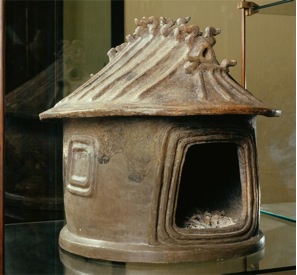
Rome existed with in the region referred to as Etruria; because of this, Etruscan influence on Roman art was likely quite large, as tombs and artworks were being actively created through the area. Many Etruscan cities remain inhabited, leading to their art being incorporated to modern creations.
Dr. Laurel Taylor, "The Etruscans, an introduction," in Smarthistory, August 8, 2015, accessed September 13, 2020, https://smarthistory.org/the-etruscans-an-introduction/.
Boatwright, Mary, Gargola, Daniel, Lenski, Noel. Talbert, Richard. The Romans: From village to Empire. Second Edition. New York: Oxford univrsity Press, 2005. Print.


I agree learning about what's important about to Etruscan artwork helps you better understand their culture and why they do what they do.
ReplyDelete